A fire in a block of flats rarely begins with a wall of flame. More often it begins with a charger left plugged in, a pan of oil forgotten on the hob, or a door propped open with a shoe. Most of what keeps Larch Court safe is unglamorous, quick and repetitive, and that is precisely why it works. Fifteen minutes, once a month, is enough to test what needs testing, clear what needs clearing and catch the small faults before they become someone else's problem.
Start With the Alarms
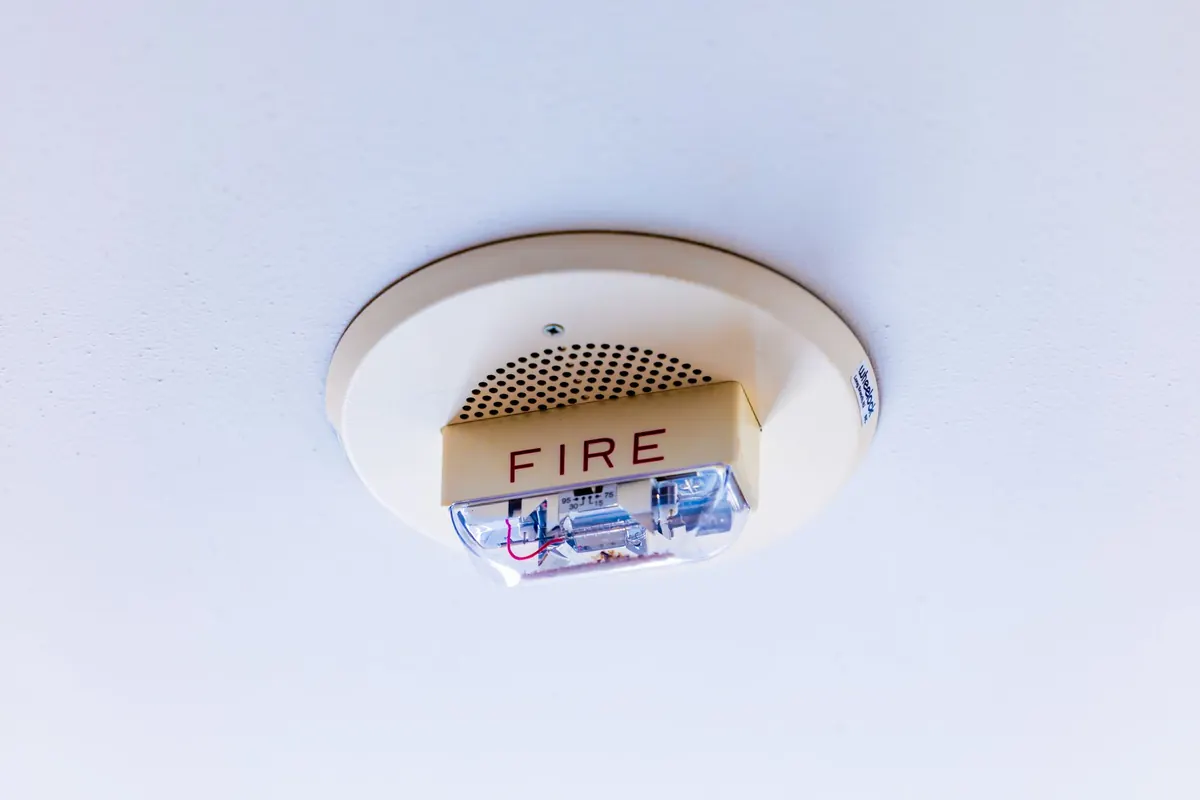
Alarms are the only part of your flat that keeps working while you are asleep. Test every one of them each month by pressing the button until it sounds, then release it. If the sound is weak, intermittent or absent, deal with it the same day rather than adding it to a list.
Weekly testing is the ideal; monthly is the realistic minimum. While you are up there:
- Dust the vents gently with a vacuum brush attachment. Grease and dust are common causes of both false alarms and missed alarms.
- Never paint over an alarm, and never borrow its battery for something else.
- If you cannot reach, use a broom handle carefully, or ask a neighbour or the managing agent for help rather than leaving it untested.
- A chirping alarm usually means a low battery or a unit near the end of its working life. Sealed units typically last around ten years, so check the date on the casing.
Kitchens are better served by a heat alarm than a smoke alarm, since steam and cooking fumes set smoke alarms off. If you have gas or solid fuel in the flat, keep a carbon monoxide alarm too and test it on the same day.
Walk Your Escape Route in the Dark
In a real fire the lights may be out and the corridor may be full of smoke. You will not be reading signs; you will be following habit. So rehearse the habit.
- Walk from your bed to the front door without switching on a light. Do it once and notice what you would trip over.
- Keep keys in one known place. A hook by the door beats the bottom of a handbag.
- Keep a small torch where you sleep, not in a drawer on the other side of the room.
- Count the doors between your flat and the exit. That count is what gets you out if smoke is thick.
Then look at the route itself. Shoes, bin bags, flattened cardboard and pushchairs left on a landing are fuel and an obstacle at the same time. House rules at Larch Court, and most leases, do not allow it. If you need somewhere to keep bulky items, ask about proper storage instead of leaving them in the way.
Communal Doors: Three Things to Check
Your front door and the doors onto the stairwells are fire doors. They are built to hold back smoke and flames, and they only do that job when they are closed and undamaged. Once a month, check that:
- The door closes fully on its own, without being held.
- The latch clicks properly into the strike plate.
- The edges and seals are intact, with no gaps, holes, missing strips or paint over the seal.
Never wedge a fire door open, and never remove or disable a self-closer because it makes carrying shopping awkward. If a door drags, will not latch or has been knocked about, report it rather than adjusting it yourself. Keep bin store doors and chute hatches closed as well; a propped bin store door is one of the more common ways a small fire becomes a serious one.
Electrical Safety in the Flat
Electrical faults are a common cause of flat fires, and most of them are preventable with habits rather than equipment. The simplest rule is one high-power appliance per socket. Kettles, heaters, washing machines, tumble dryers and hairdryers draw a lot of current; two of them on one socket, or one at the end of a long extension lead, is asking for trouble.
- Check plugs and cables monthly for fraying, scorch marks, cracked casing or a plug that feels warm. If it is warm, stop using it and have it checked.
- Do not daisy-chain extension leads, and uncoil them fully before use. A coiled lead under load can overheat.
- Keep cables out from under rugs and away from doorways where they get crushed.
- Do not charge e-bikes, e-scooters or their batteries in a hallway or communal area, and never leave one charging overnight while you sleep. Charge in a room with a working alarm, and stop at once if a battery looks swollen or damaged.
- Clean the tumble dryer lint filter after every load, and run appliances during the day when you are at home rather than overnight.
Kitchen, Candles and Heaters
Most flat fires start in the kitchen, and almost all of them start when someone's attention moves elsewhere.
- Stay in the kitchen while you are cooking with oil or fat. Do not answer the door mid-fry.
- Turn pan handles inwards and keep tea towels, oven gloves and recipe cards away from the hob.
- If a pan catches, do not move it and never throw water on it. Turn off the heat if you can do so safely, cover it with a lid or fire blanket, and get out and call 999 if it does not die down.
- Put candles in a stable holder, away from curtains, and blow them out before you leave the room. Never leave one burning as you fall asleep.
- Give heaters a metre of clear space, never use them to dry clothes, and never leave them on overnight.
- Smoke outside, never in bed, and use a proper ashtray.
Your Ten-Minute Monthly Routine
Put it in the diary: the first Saturday of the month, or the same day you change the bed. Then work through this in order.
- Press the test button on every smoke, heat and carbon monoxide alarm.
- Check alarm casings for damage, paint or dust.
- Walk your escape route and move anything that has crept into it.
- Open and close your front door and listen for the latch.
- Check communal doors for wedging, damage or missing seals.
- Look at every visible plug and cable in the flat.
- Clean the tumble dryer filter and the cooker hood filter if you have one.
- Confirm where your keys and torch are.
- Report anything communal you cannot safely deal with yourself.
Keep a note of the date you test and of anything you report. If a communal door is faulty, tell the managing agent or your landlord in writing, because a message in a group chat may be read but it is not a record. Do not attempt repairs to fire doors, alarm systems or communal wiring yourself; those need someone qualified. If you live with mobility, hearing or sight needs, ask about a personal evacuation plan so the building's arrangements work for you. And if you are unsure what your lease or tenancy requires, take advice.
It is a small amount of bother, once a month. It is also the difference between a story about a beeping alarm and a story about a fire.
Photo: Caleb Oquendo / Pexels